
Workshop Story
We didn’t simply discover paulownia as a material. We grew alongside it.
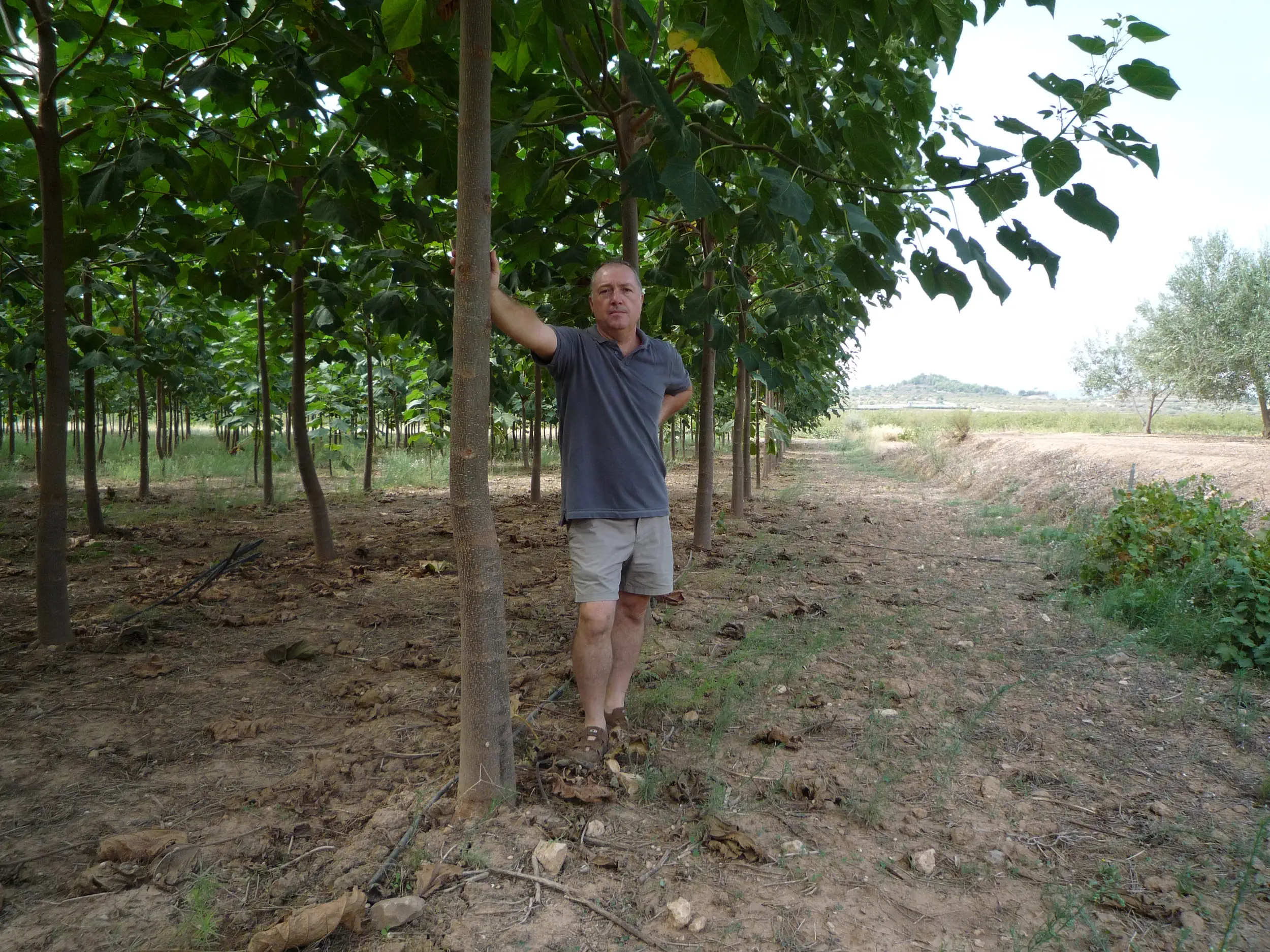
In 2005, I planted my first paulownia tree.
I had studied agricultural engineering and had spent much of my professional life connected to trees. I also had land of my own, and I wanted to grow something with a future: a crop with a purpose, something different from what everyone else was doing.
I’ve always preferred taking the less-travelled road, even when it means finding your way one step at a time.
At that time, paulownia was almost unknown in Spain. Its long history and established place in Asia had caught my attention, and I became one of the early growers to explore its potential here. My intention was straightforward: grow trees and use their wood.
I had no idea where that decision would eventually lead.
My son was eight years old when we planted those first trees. Today, he is the shaper behind TKBoards.
It all started with one tree.
In 2005, we planted our first paulownia tree. We couldn’t have imagined that it would lead us to a lifetime of learning, working with wood and eventually building our own boards.
Learning the wood, from the ground up
Six years into growing paulownia, I started looking for a market for the timber. The response in Spain was disappointing. Again and again, I was told that the wood had no value and that I should do something else.
But I knew there was another side to the story. In Australia, shapers were already using paulownia to build retro surfboards, as an alternative to balsa. If people on the other side of the world saw potential in this wood, perhaps the problem wasn’t the material. Perhaps we simply needed to understand how to use it properly.
So I decided to find out for myself.
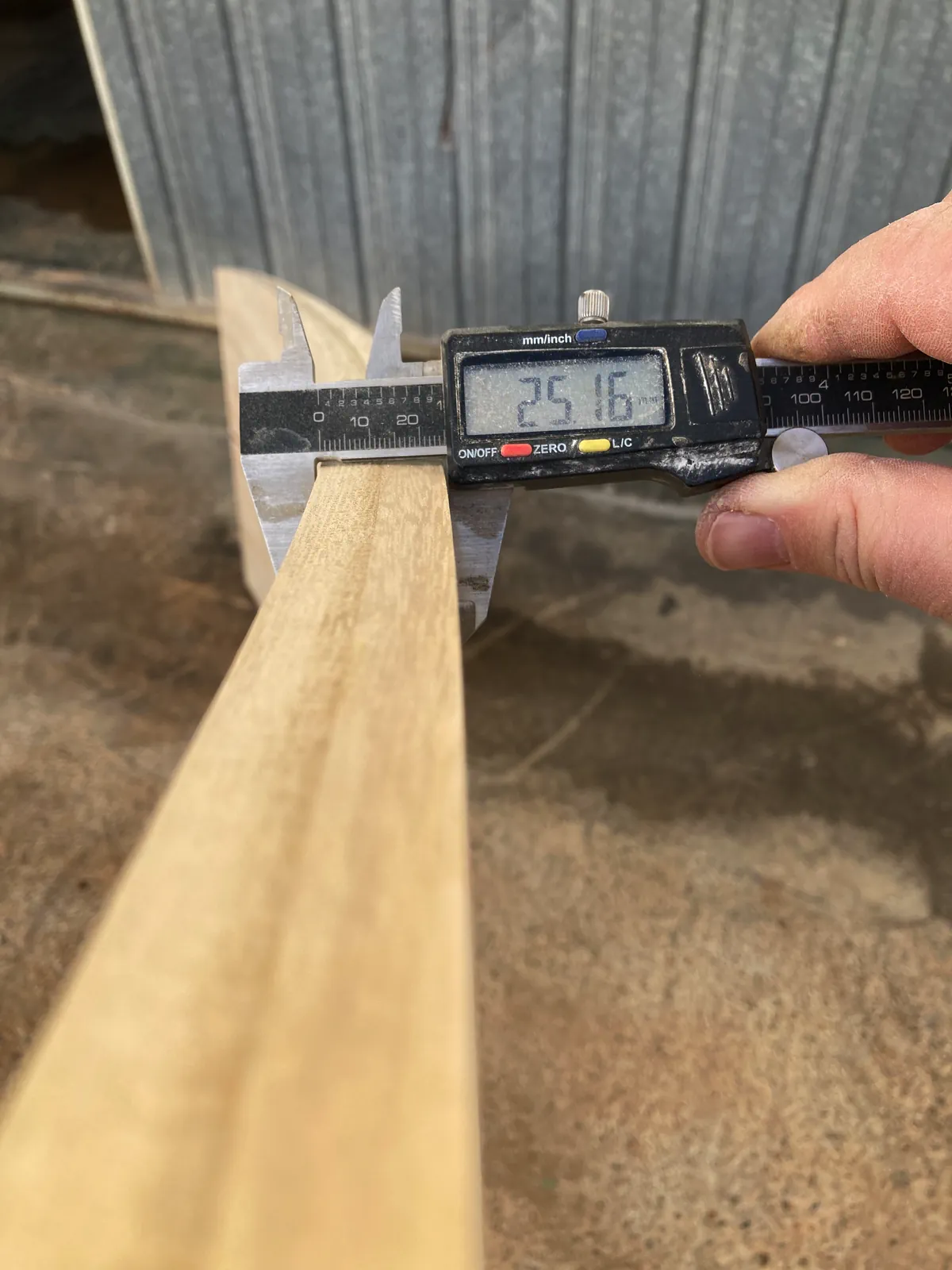
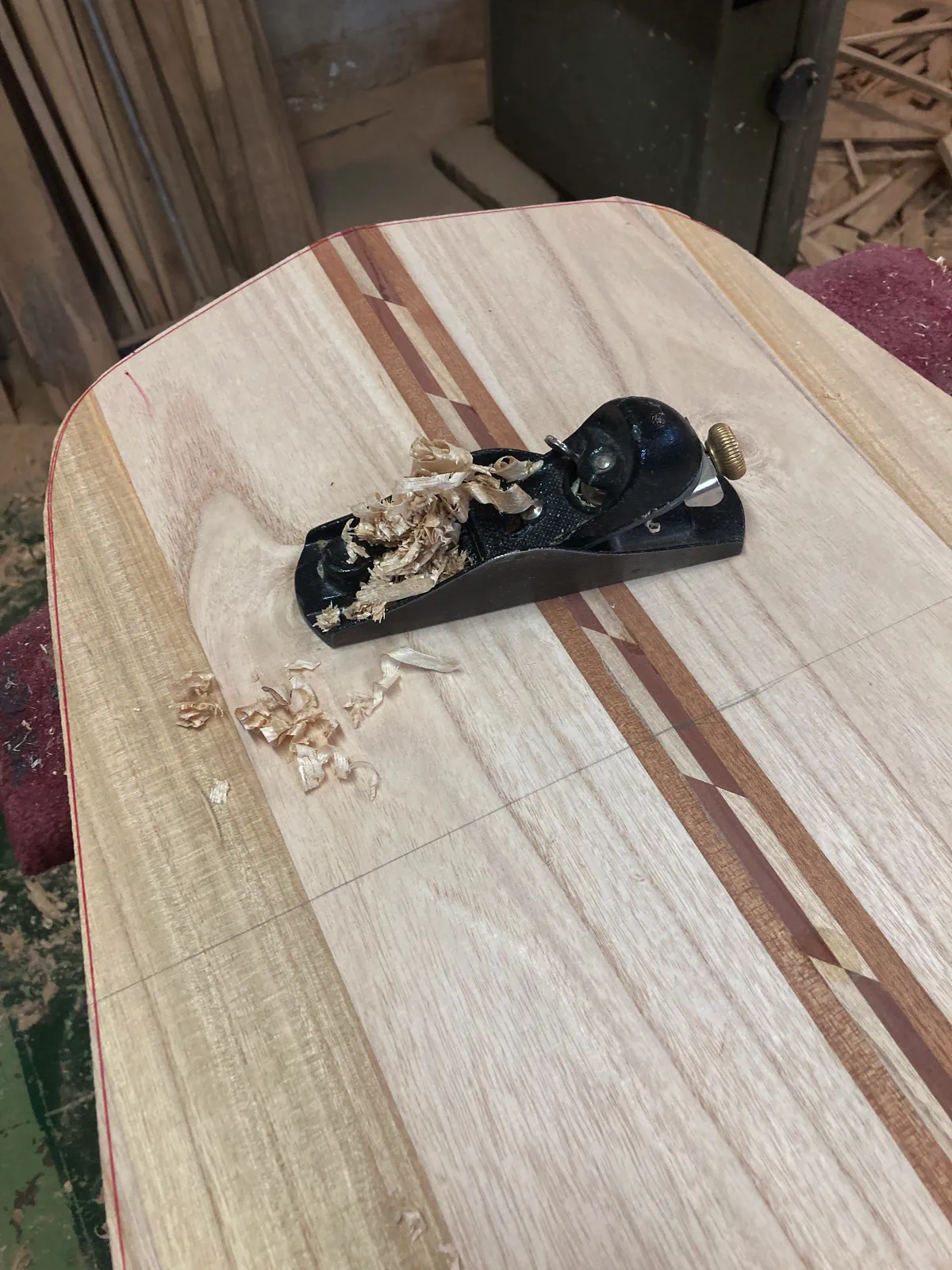
I felled trees from my own plantation and took them to a sawmill. I wanted to understand how logs were processed, how the cuts were made and how the timber could be used efficiently. It was a fascinating education, but processing such small quantities that way wasn’t viable.
The solution was to start sawing the timber myself in the workshop.
In 2012, I built my first website and began offering paulownia wood grown in Spain. What started as a way to find a market for my own timber soon opened a much bigger door.
A conversation with the world
The website brought me into contact with shapers from all over the world. Because paulownia was still relatively new to many of them, our conversations were full of questions, experiments and ideas.
I began to understand what they actually needed: which dimensions worked best, which formats saved them time and how the wood could arrive ready for the next stage of their work.
Working with paulownia taught me that wood is never just a uniform raw material. It is alive in the way it behaves. Moisture, grain, the direction of the cut and the natural curvature of a piece can change everything.
There were tools to acquire, techniques to learn and plenty of mistakes to make. With every step, I discovered not just what worked, but what to avoid next time.
Gradually, the offer evolved from timber boards into strips, panels and surfboard blanks, in different formats for different purposes. I learned to work with curved paulownia and to prepare blanks that made life easier for shapers who didn’t necessarily have the equipment, time or desire to do all the woodworking themselves.
The aim was never simply to sell wood. It was to understand the people working with it and help them get more out of it.
That exchange of knowledge has remained one of the most valuable parts of the journey.
From supplying the wood to building the boards
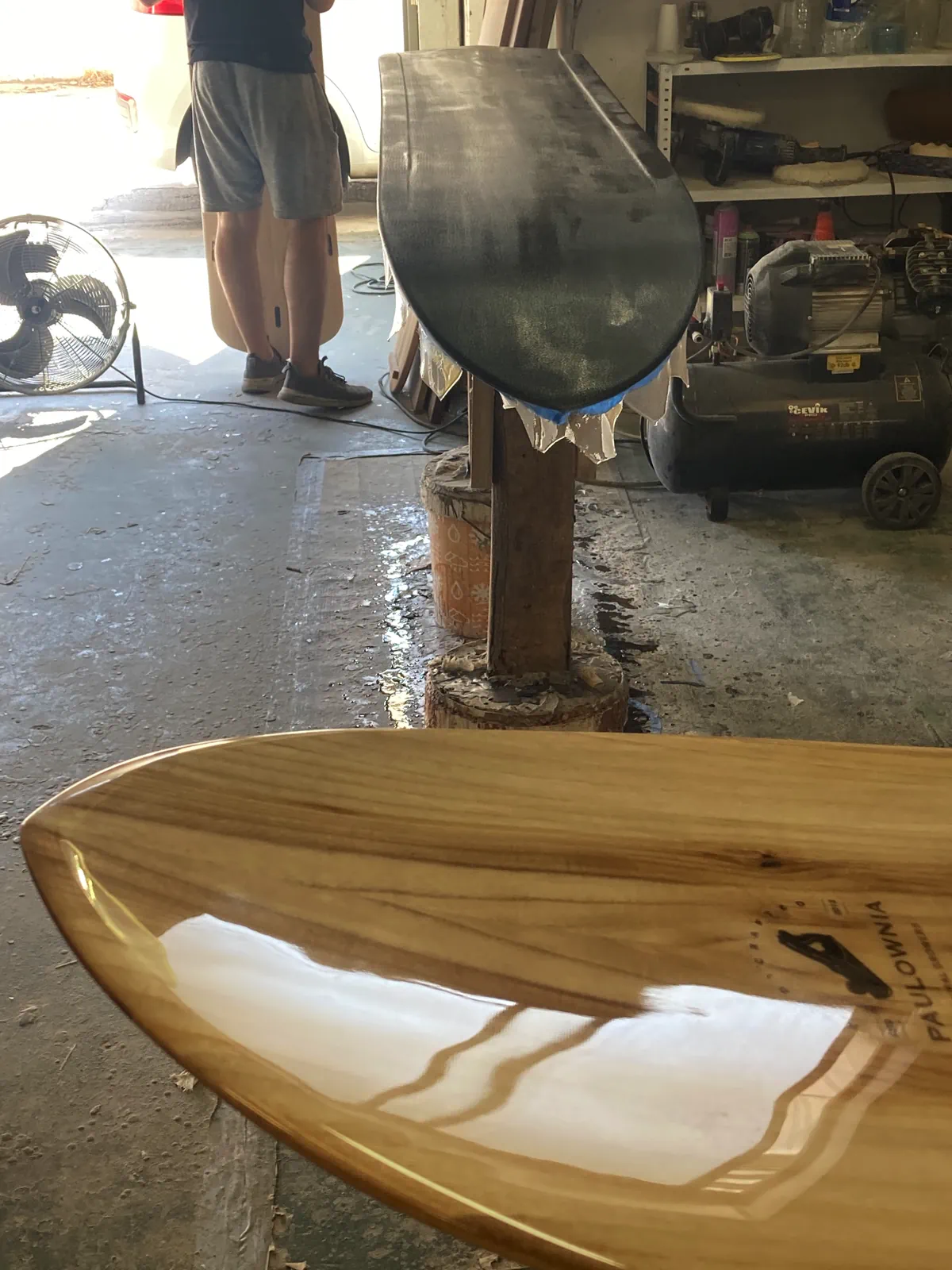
As the project grew, another question became increasingly important: if we wanted to understand what shapers really needed, why not build our own boards and test our ideas in practice?
Making our own boards became a natural extension of everything we had learned. Every design brought new challenges. Every improvement raised further questions about construction, materials and the shaping process.
At the same time, my son was growing up with the wood and learning to ride the boards himself.
In kitesurfing, a renewed interest in wooden boards was taking shape. The traditional Alaia concept was being adapted to the demands of kiteboarding, developing into a different style of board known as the Tiki.
We were involved from the early stages of this movement, making curved paulownia blanks for the Tiki community. Over time, we developed three blank designs that helped establish a more consistent approach to building these boards.
Throughout this process, we stayed in close contact with experienced shapers, exchanging ideas about details that might seem small but make a real difference: a curve, a shape, a construction choice or a solution to a recurring problem.
Building our own boards alongside our work with other shapers allowed us to understand those details from both sides. We could see what worked, what didn’t and what could be improved.
And that is how TKBoards came about.
TKBoards: the culmination of a journey
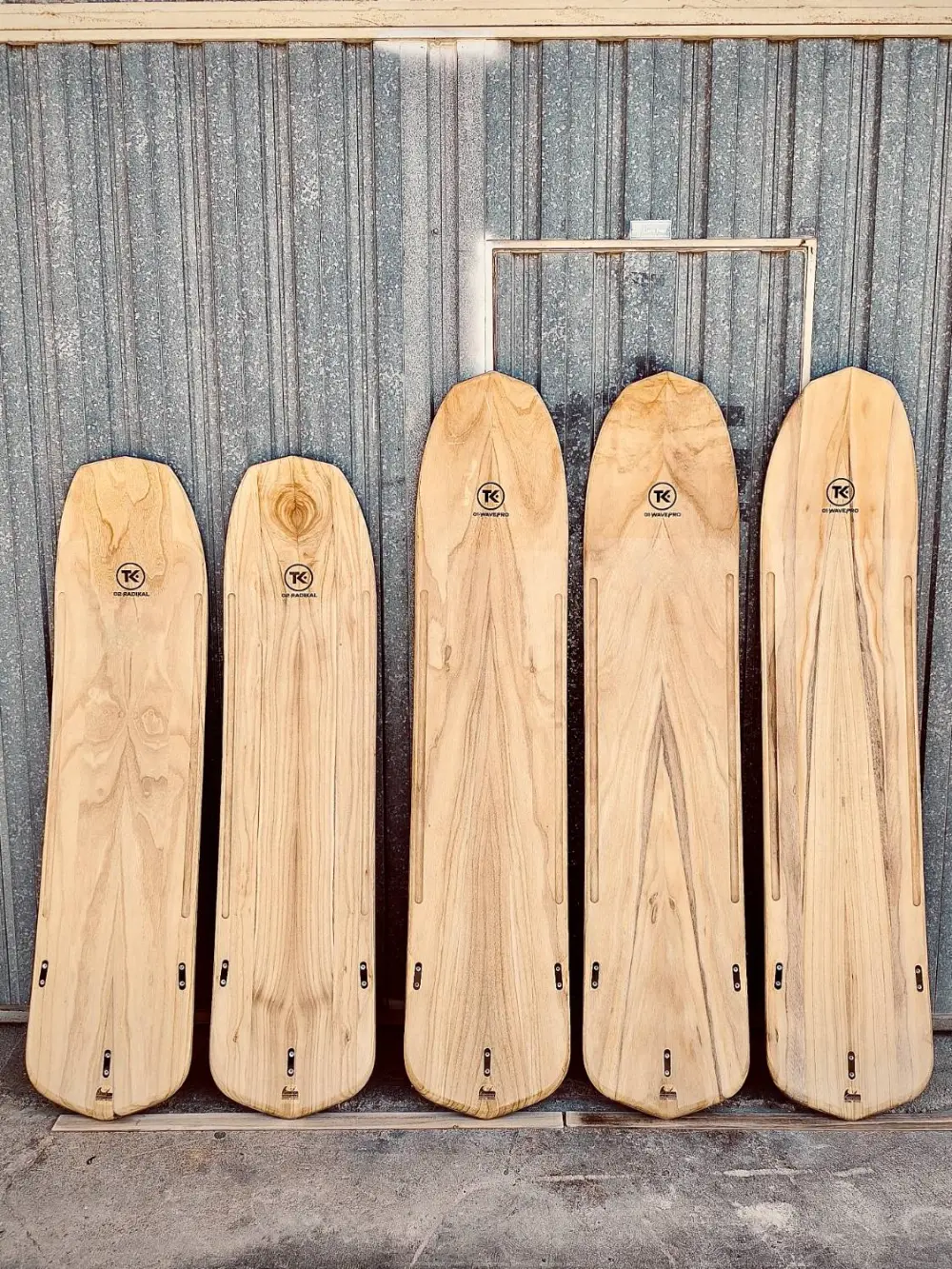
As our own designs and construction methods evolved, we began to see new possibilities for kiteboards that retained the character and feeling of a Tiki while exploring what our accumulated experience could make possible.
We decided to take that knowledge further and develop our own kiteboards, with a distinctive design and a construction process of our own. Each step had to be built, tested and validated in the workshop.
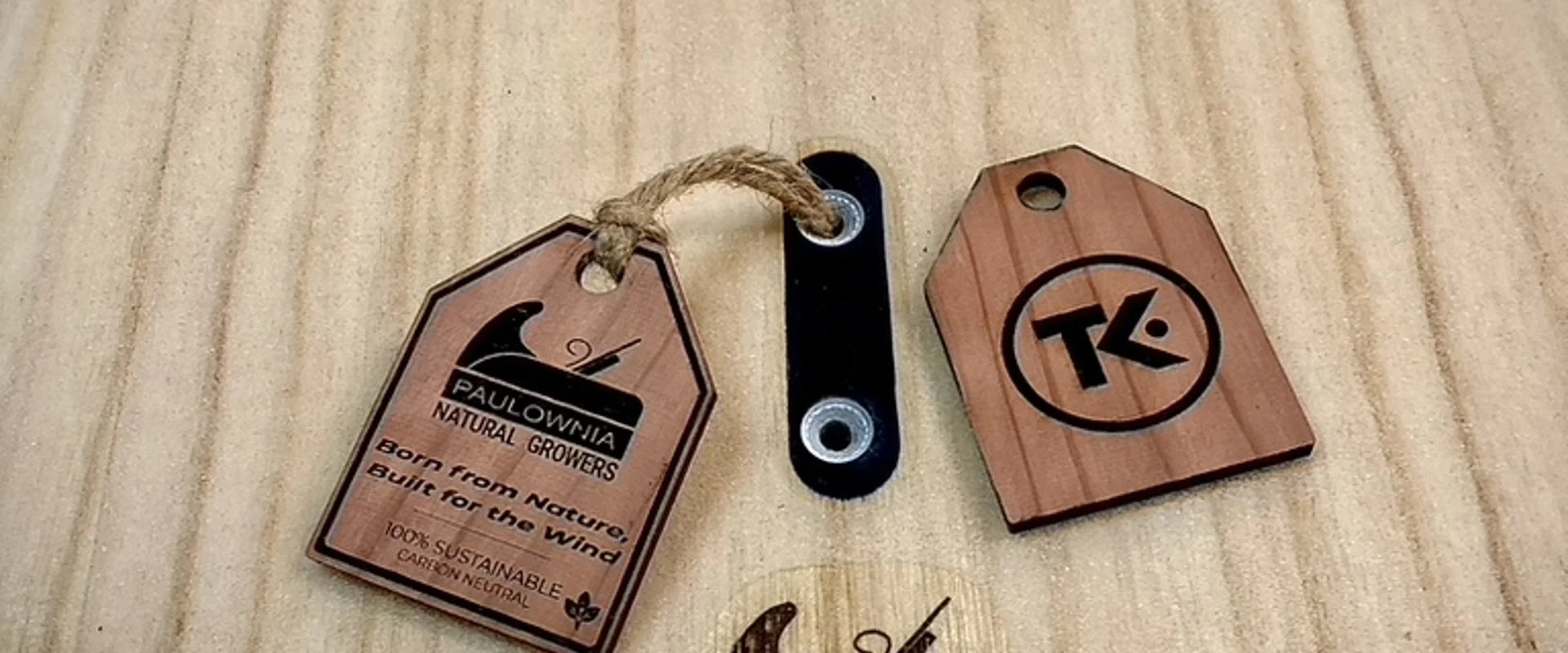
TKBoards is the culmination of that journey: the trees, the timber, the woodworking, the conversations with shapers, the experiments and the boards we have built and ridden along the way.
It is not a separate project added to the story. It is where the story has led us.
From the tree to the rider
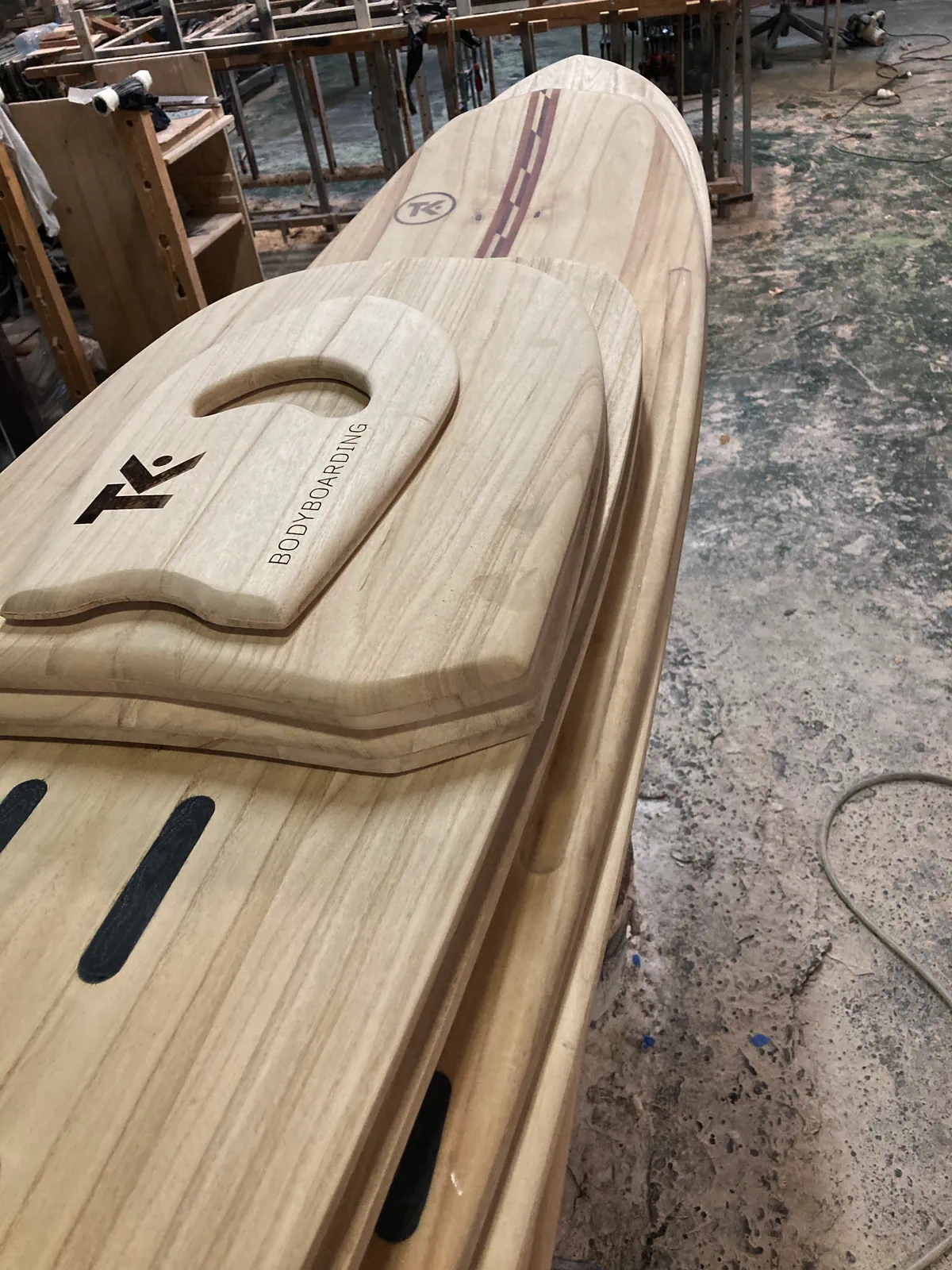
For us, working with paulownia has always meant more than choosing a material for its appearance or properties.
The original intention was to grow trees for timber. Over time, that intention developed into a much deeper understanding of how the wood could be used, how it could be prepared for others and how it could become part of a finished board.
We are proud to be involved throughout that journey, from growing the trees to building the boards that reach our customers.
This connection also shapes the way we work. We care deeply about the quality of the wood we supply, the quality of the boards we make and the way we treat the people who trust us with their purchases.
We don’t make boards like products coming off an assembly line. If something isn’t right, we keep working until we are satisfied with it. We don’t want growth at the expense of the standards and principles that brought us here in the first place.
Growing our own material gives us a direct relationship with its origin. Working with it ourselves gives us a deeper understanding of its possibilities and limitations. And building our own boards allows us to keep learning.
That is how we work: not a label added to a finished product, but a long-term commitment to understanding a resource, making meaningful use of it and continuing to improve how we work with it.
The journey continues
When I planted that first tree in 2005, I couldn’t have mapped out the path that would follow.
I didn’t know that I would end up supplying shapers around the world, developing blanks for the Tiki community or building our own kiteboards alongside my son.
None of it was predetermined. Each stage grew out of the previous one, shaped by new challenges, new expectations and the desire to find better solutions.
We still don’t know what the next challenge will be.
And perhaps that is the point. We started with a tree, learned by working with it, and kept moving forward whenever a new possibility appeared.
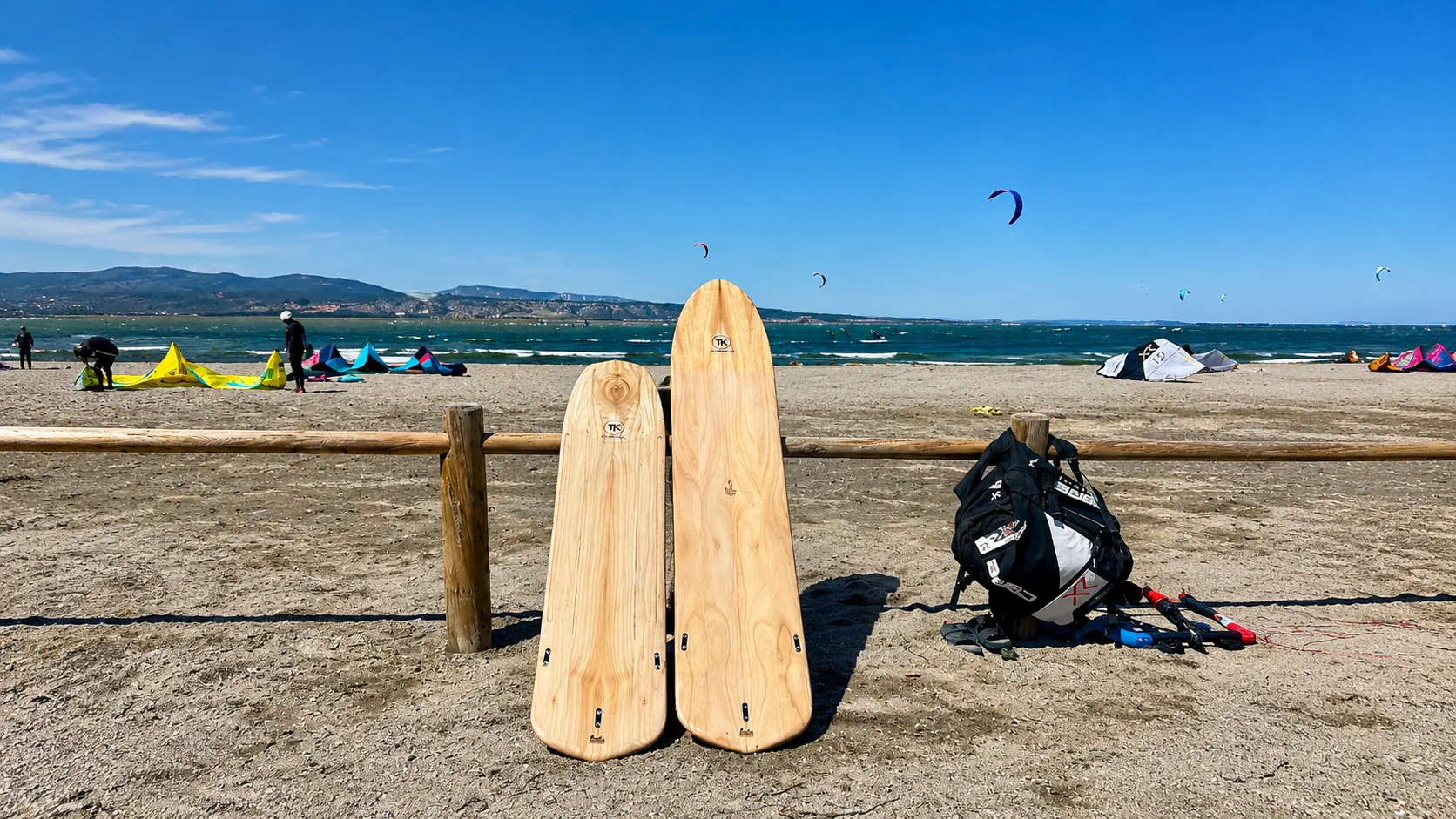
TKBoards is where that journey has brought us so far. The next chapter is still to be written.